
Contact 7 days a week
Phil Little
4620 North Arm Drive
Mound, MN 55364
952-607-6063
phil@phillittleracing.com
UNUSUAL ICE BOAT $1895

The original Slicer with simple molded plastic seat
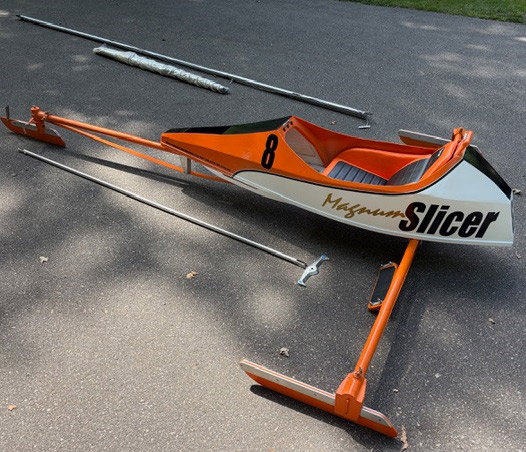
The new Slicer Magnum with a comfy seat
Over the past 50ish years or so Gary Eklof from Lake Minnetonka invented and manufactured a low cost ice boat called the Slicer. With the clever use of his own castings, Gary used commonly available 2” pipe, mixed sailing hardware, an outsourced boom, plus mast and a sail by Bowers to offer a portable ice boat anyone could afford. It was designed as a starter boat and as a fun boat for experienced pilots who want to sail from their shore locally when the wind came up instead of driving 700 miles for clean ice. As it is a small boat it should be quick and easy to set up for a quick ride.
A note here.
This boat is not just built from two inch pipe. Read below about an exclusive tensioning system.
In the winter of 2015, my brother Ric and I each bought used Slicers from early buyers at Gary’s recommendation--the first 0 boat went to Ric and the 8 boat for me. I asked around about the Slicer's sailing habits. The upshot was to make longer runners for a harder bite in stronger wind, tighten up the casting/pipe joints and to extend the length/width of the boat closer to DN specs. Oh, and make a body for wind protection. All parts of this boat are new except mast, boom and sail. It has never been used. After finishing over 11 years, I’m 84 and too old to use it.
I had the unfortunate occasion to lie in a DN and I don’t know how you guys do it. The Slicer Magnum has an upholstered foam seat for upright seating under a boom with lots of headroom instead of pressing your helmet to your chest DN style.
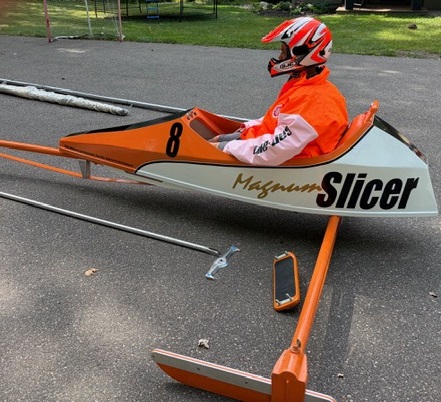
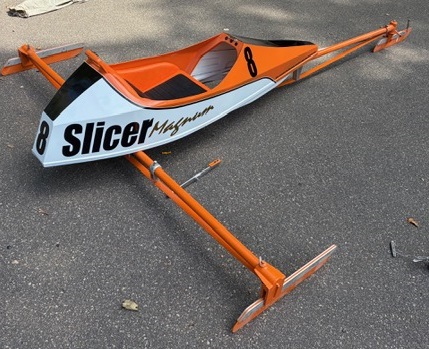
Let’s compare the specs of DN, Slicer and Slicer Magnum.
| DN | Slicer | Slicer Magnum | |
|---|---|---|---|
| Length LOA | 12' | 10' | 13' |
| Plank/crossboard length | 8' | 7' 10" | 8' 10" |
| Hull dimensions | 21" W | ? | 8' L x 23" W x 15" H |
| Seat width | Lay in wood hull | 20" W x 18" H | 15" wide cushioned foam seat at the narrowest |
| Riding comfort | Poor | Poor | Great. Boom swings overhead. |
| Hull weight | 45# | 100# | 85.4# |
| Total weight | 100-150# | 100# | 208# |
| Main runner length | 36" | 20" | 29" |
| Steering runner length | 30" | 20" | 25" |
| Mast length | 16' | 18' | 18' |
| Boom length | 9' | 6' | 6' |
| Sail area, sq. ft. | 60 | 50 | 50 Bowers high aspect Dacron |
| Steering | Long tiller | Foot pedals - hands free for sheet control | Foot pedals - hands free for sheet control |
Boat Features
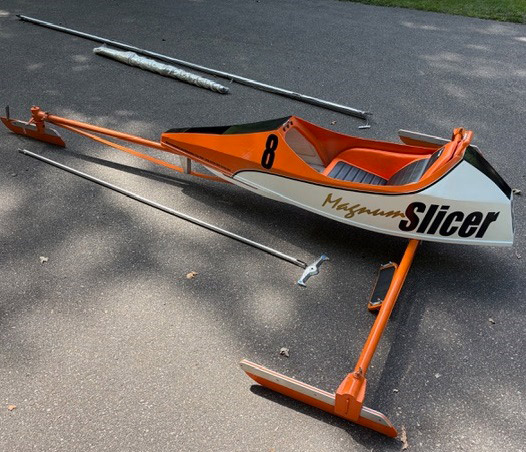
Here’s the essence of the boat. The body rests on a frame and is not a stressed member--that’s how I got away with thin plywood. Above the boat in the photo are mast, boom and sail. Below the boat is the foot control steering.
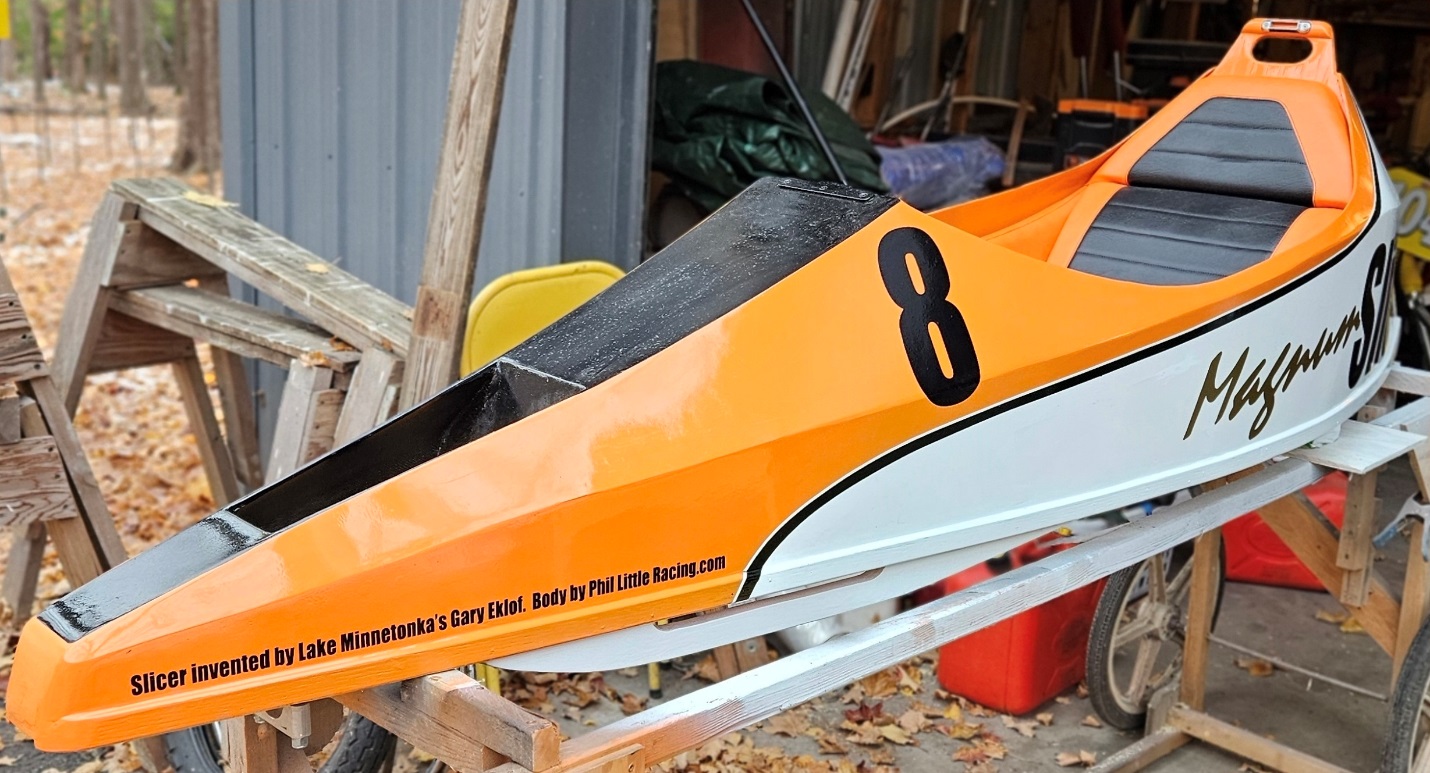
Behind the seat is the right hand climb-in handle. For buoyancy, I used marine grade expanding foam in front and in the back. It’s so strong it adds rigidity to the hull. Most of the hull is ¼” plywood. It is sealed with automotive PPG acrylic urethane.
I didn’t make a rounded hull like so many boats. I wanted a flat plane so wind forced the boat down. The cavity in front is where mast attaches. You see that white tapered board under the orange hull. That and one on the other side reinforces the hull bottom which is open for your heels as you steer.
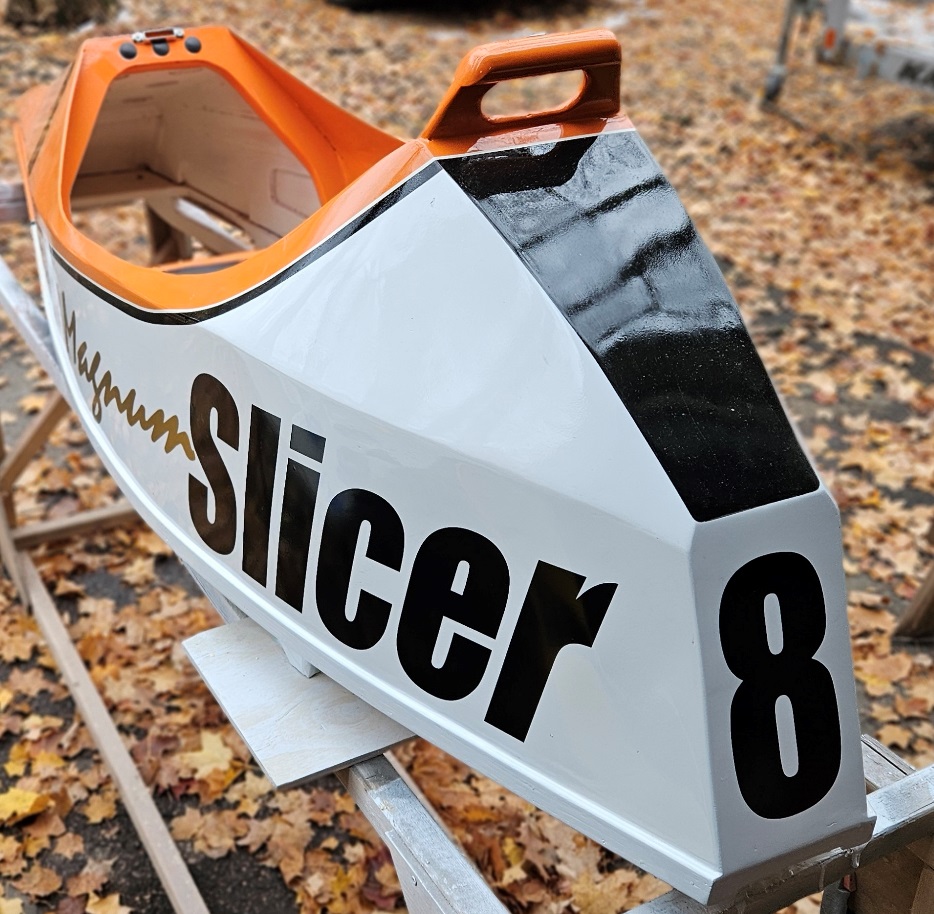
The pulleys attach to the rear deck. The wood there is very thick for long screws.
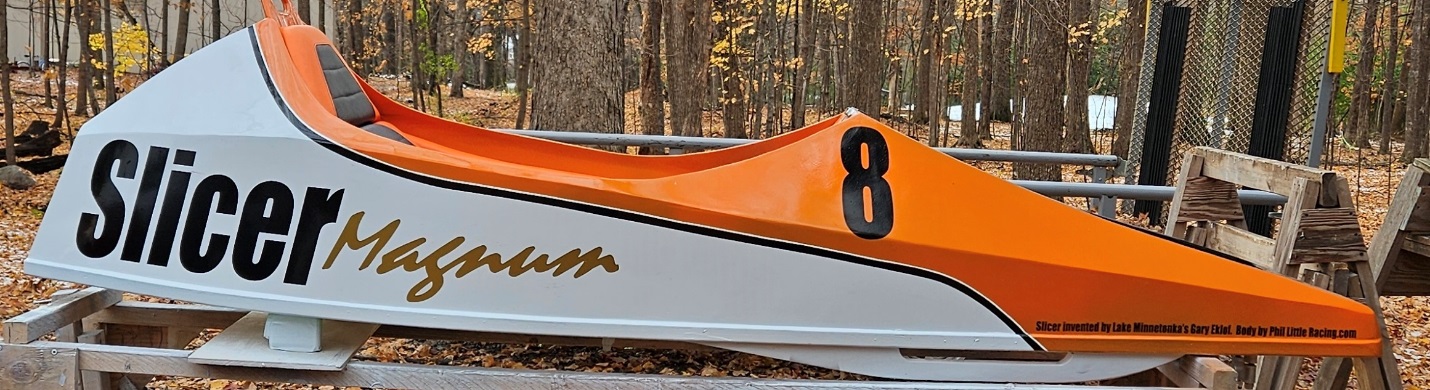
I had some fun designing this nifty paint scheme. The addition of “Magnum” made sense because it’s a bigger boat.
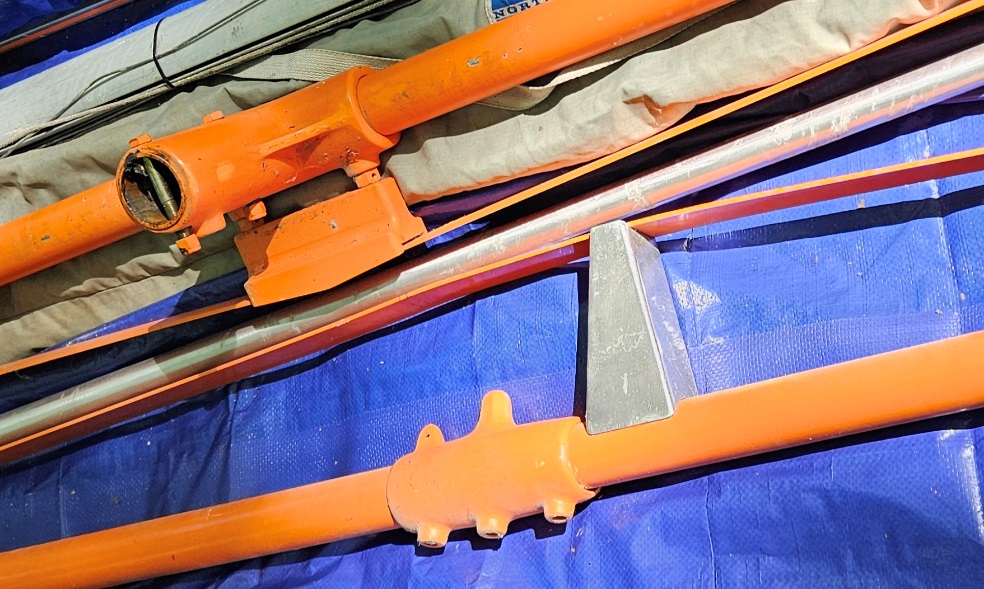
Most of you ice people are poo-pooing the 2” steel tubes at this point. I want you to look at these two pipes. You’ll notice two machined trapezoidal blocks between the cross plank and main plank and steel straps. This tensioning system adds tremendous strength to the tubing (they ain’t gonna bend).
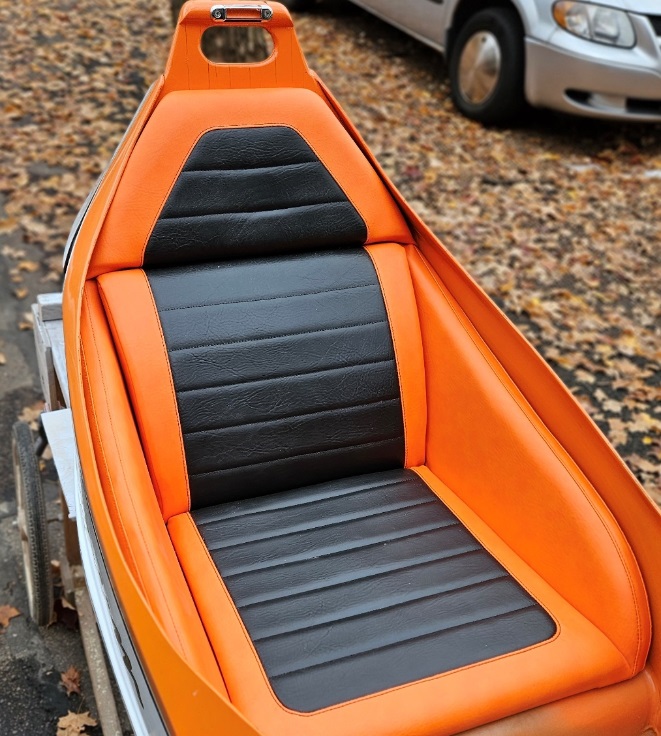
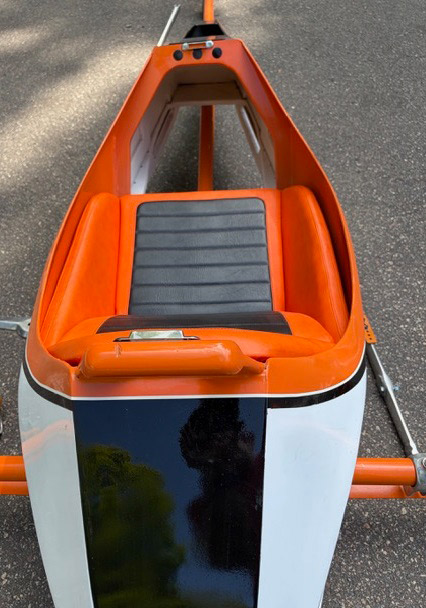
Here’s a closeup of the seat. I have an upholsterer from my motorcycle business who is a total pro. The seat foundation is ¼” plywood covered in fiberglass. I carved foam for the ergo seat shape and side bolsters. The vinyl is marine grade for the elements. It’s very light and strong. It lifts out easily. I included race car style seat belts which is option you can use. I didn’t want to be pitch poled out of the boat in case the boat hit water. I’d rather hang upside down for minute to figure the next step.
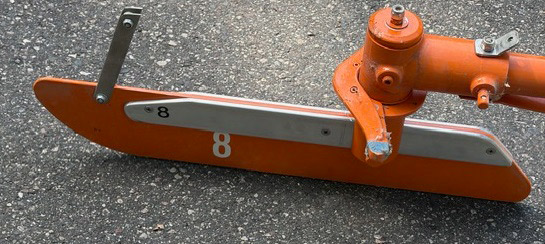
I had these runners made. ¼” steel sandwiched by aluminum supports. Seen here are steering arm and parking brake.
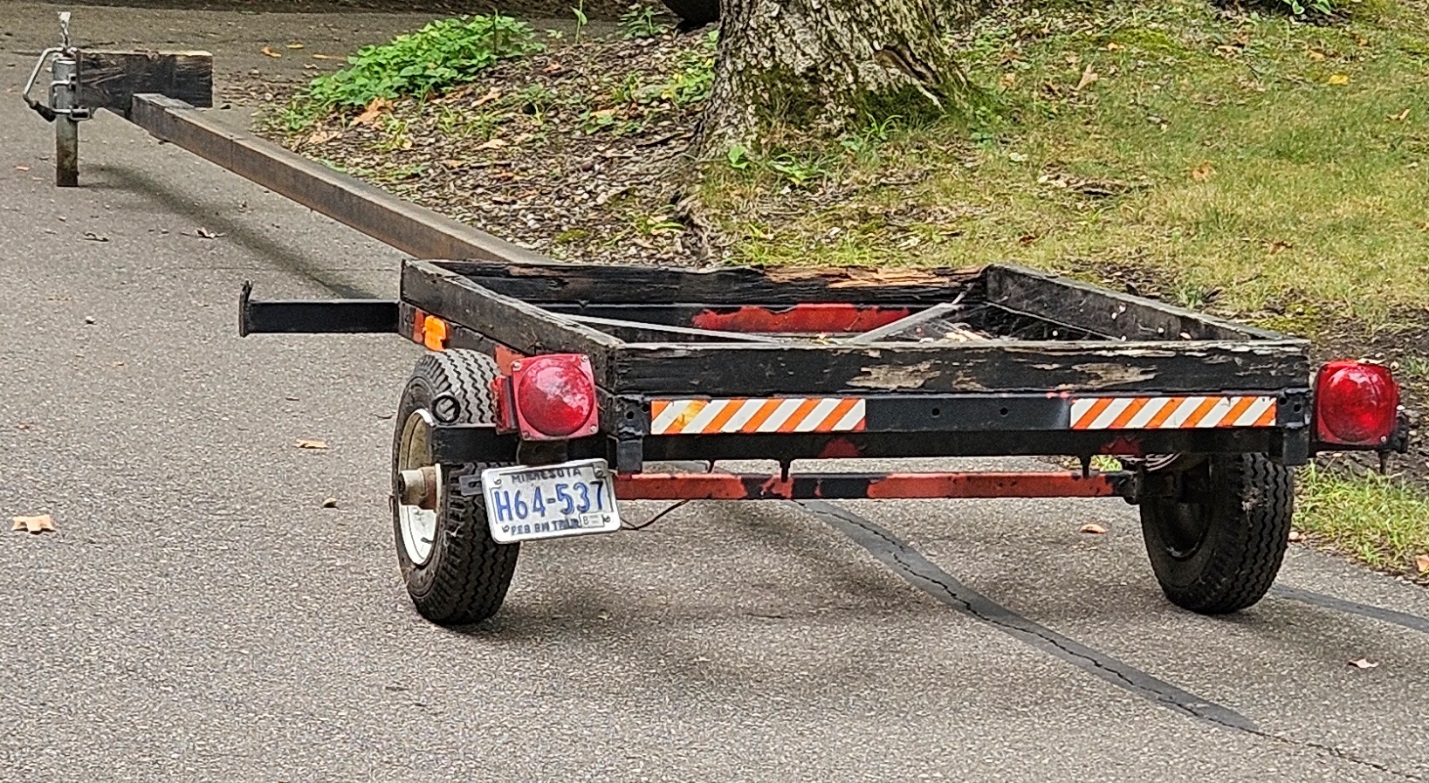
This trailer is included in the package. It has a very long tongue, which wasn’t cheap. If you are traveling, you need to build a two level box to house body and frame. This trailer was new five years ago. It’s never been used. The 2x4s on top have to be replaced.
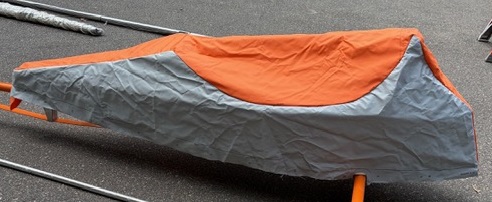
Custom fit cover and cockpit bow.
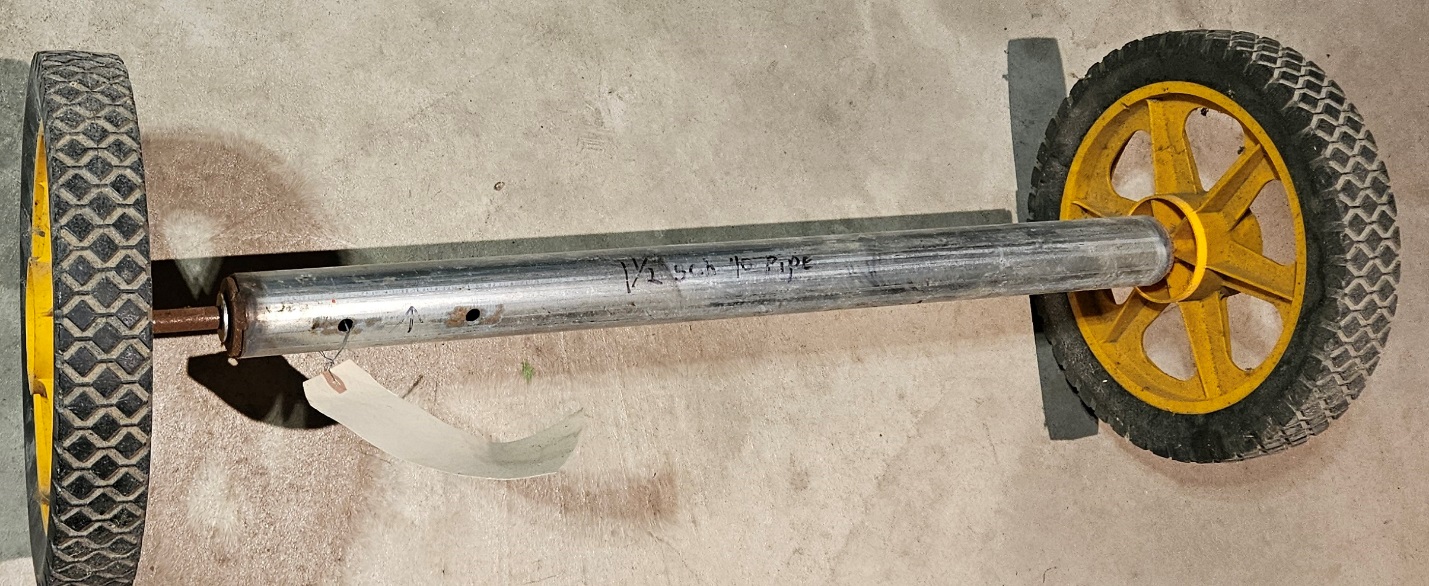
This wheel set was intended to roll the boat in your trailer boat box. A front wheel will be needed too.
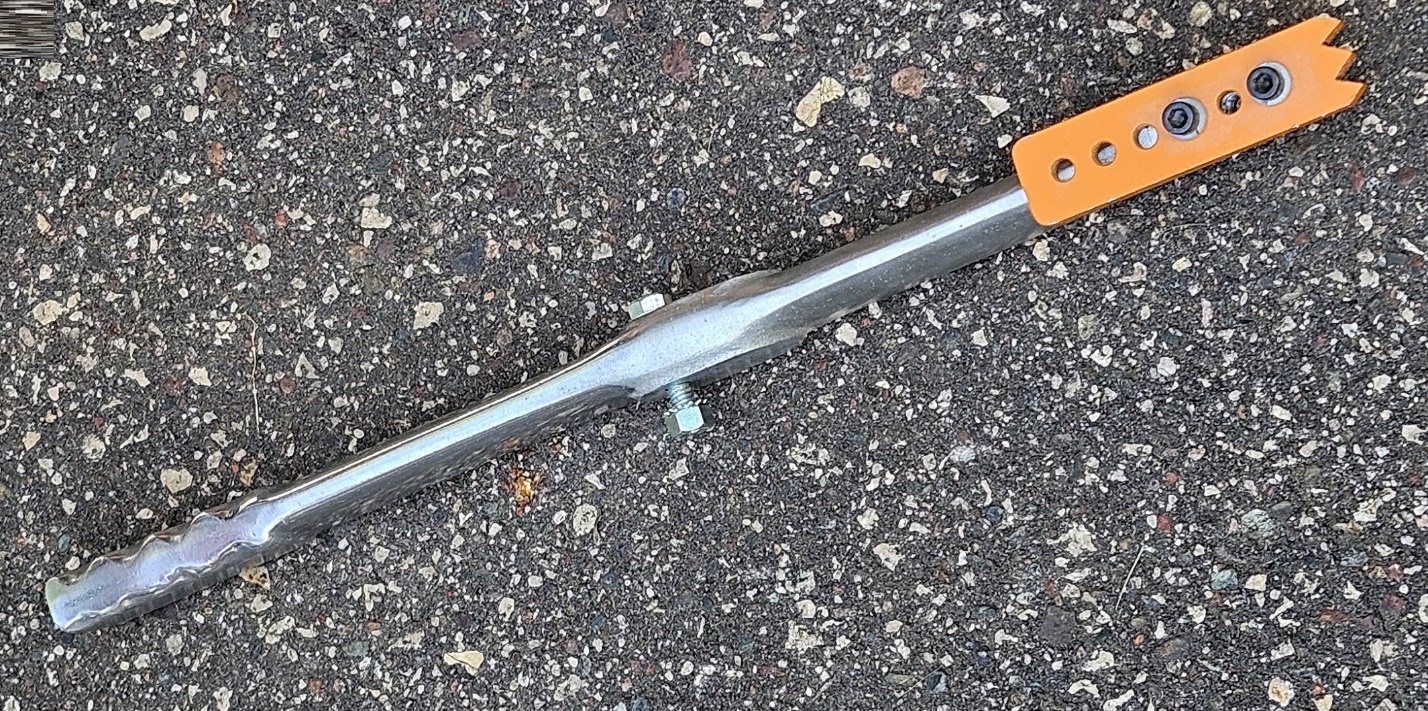
This was Gary Eklof’s brake handle which mounts to the right plank tube. I had custom made steel teeth made so you’ll really stop.
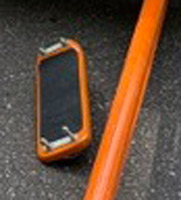
Next to the “cross plank” is the jump-up foot step with nasty nonslip material.
The Concept
If you’ve read to this point you’ll appreciate the back story. I wanted to build a wind defeating body (but one with style on a small scale, of course). This was the back-of-the napkin idea.


I did some modeling for shape and color application.
The Build
This is going to shock ice boaters but no plans were drawn to craft this thing up. The hull was limited to 8-feet plywood sheets, which is right for this small boat.


Start. Cut wood.


That gray spray stuff is Duratech. It’s a two-part high-build primer. It allowed me to fill and seal all the wood grain and create a smooth surface for paint. The entire rear section behind the seat bulkhead is filled with pour-foam polyester for flotation. Another foamed section is in the nose.
Note what looks like a vertical wood sheet under the back deck. It’s a thick laminated multi-sheet for seat support and for fastening the pulleys with long screws.

Dashboard/bulkhead and a seat base slanted rearward to keep you in place. The upholstered seat sits on this base without fasteners. This opening in the seat base can be used for tools or a sandwich.

Here is the seat back design. ¼" ply was ergo-bent to shape your spine.


Boat in sanded Duratech ready for paint.

Paint prior to graphics.

Bottom complete. I sprayed bottom with rubberized Flex Seal to fill all the wood pores. Those blue protrusions are machined clamps which attach to the tubes.
Contact 7 days a week
Phil Little
4620 North Arm Drive
Mound, MN 55364
952-607-6063
phil@phillittleracing.com